
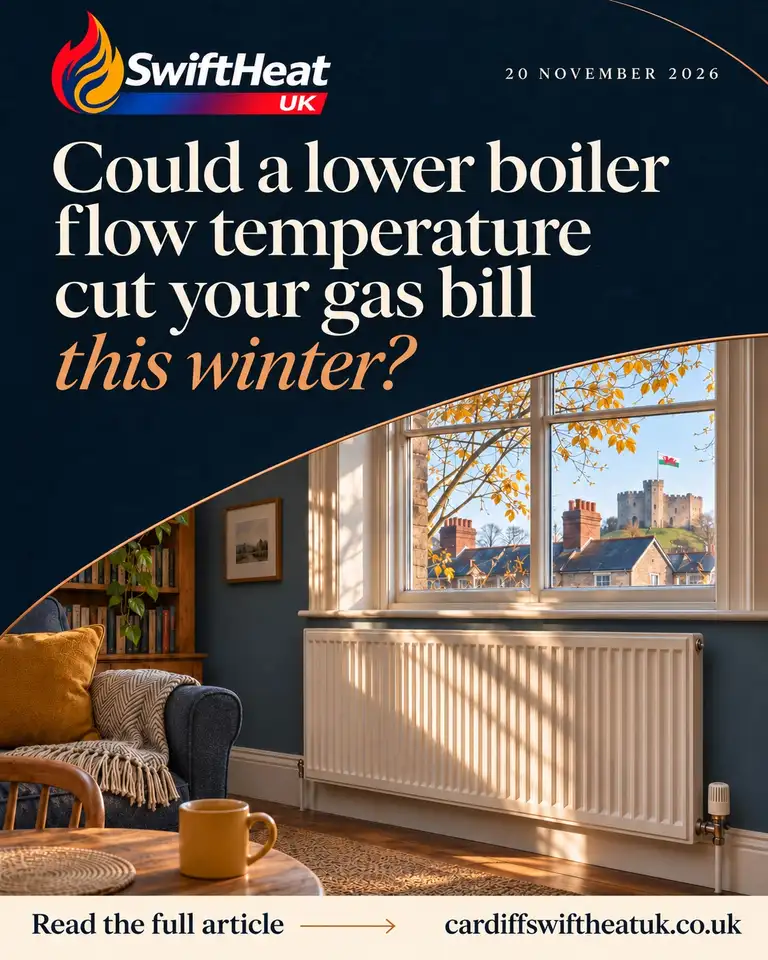
If your living room is warm by breakfast, does it matter whether the radiator feels warm or piping hot? What matters for comfort is the temperature in the room. What matters for efficiency is how hot your boiler needs to make the water to get you there.
Nesta is encouraging households with a condensing gas combi boiler to check a setting often marked with a radiator symbol. If yours is set to 70°C or 80°C, turning it down may help you use less gas while keeping your room thermostat at the temperature you like. Read Nesta’s boiler-optimisation research.
First, check how your home gets hot water
Have a separate hot-water cylinder?
If one boiler setting heats both your radiators and your cylinder, Energy Saving Trust advises keeping that boiler flow setting at 65°C or above so the stored water can reach a safe temperature. Leave the cylinder thermostat alone. If you are unsure how your system is controlled, ask your heating engineer before changing a setting. Energy Saving Trust’s boiler guidance.
Have a condensing combi that heats tap water on demand?
You can usually adjust the radiator temperature separately. If your heating controls already adjust it automatically according to the weather, ask your installer about the settings. For a combi with a manual radiator setting, try the steps below. Energy Saving Trust’s guide to heating controls.
How to try a lower setting on a combi
- Find the radiator symbol. Check your boiler’s user manual if the controls are unfamiliar. Take a photo of the current radiator setting so you can restore it. Leave the tap-water setting, room thermostat and heating schedule as they are.
- Try 60°C if the radiator setting is higher. On the next cool morning, check the room that takes longest to warm up. Is it comfortable by the time you use it? A room thermometer can help you judge.
- Adjust for the weather. If the house warms comfortably, you could try 55°C in milder weather. Some homes manage 50°C on mild days. If rooms stay chilly or take too long to warm up, turn the setting back up.
Why cooler radiators can save gas
Flow temperature is the temperature of the water leaving the boiler for the radiators. As that water gives up heat to the rooms, it cools and returns to the boiler. When the return water is below roughly 55°C, water vapour in the flue gases starts to condense. The boiler recovers heat that would otherwise escape through the flue. Lowering the flow setting helps the returning water reach that range.
How much could you save?
Early research commissioned by Nesta estimated that reducing the flow from 80°C to 60°C could cut annual household gas use by around 8% to 9%. Part of that saving came from rooms staying slightly cooler. The result in your home will depend on your starting setting, heating pattern, property and how much heat your rooms need.
How SwiftHeat UK Group Ltd can help
If your living room is warm by breakfast but the back bedroom is still cold, tell us which room struggles and when. That gives our engineers a starting point. We can check whether the heating schedule gives that room enough time to warm up, whether its radiator valve is working and whether the radiators need balancing so hot water reaches each room evenly.
If you would like help with the boiler controls, we can show you which setting heats the radiators, explain how your system heats water for the taps and help you choose a starting temperature for your home. We will also show you how to adjust it again if the weather turns colder. If we find a fault or recommend further work, we will explain the options and the cost before you decide.
Heating advice for Cardiff and South Wales
For help with boiler controls, radiator balancing or to book a professional visit, speak to SwiftHeat UK Group Ltd.