

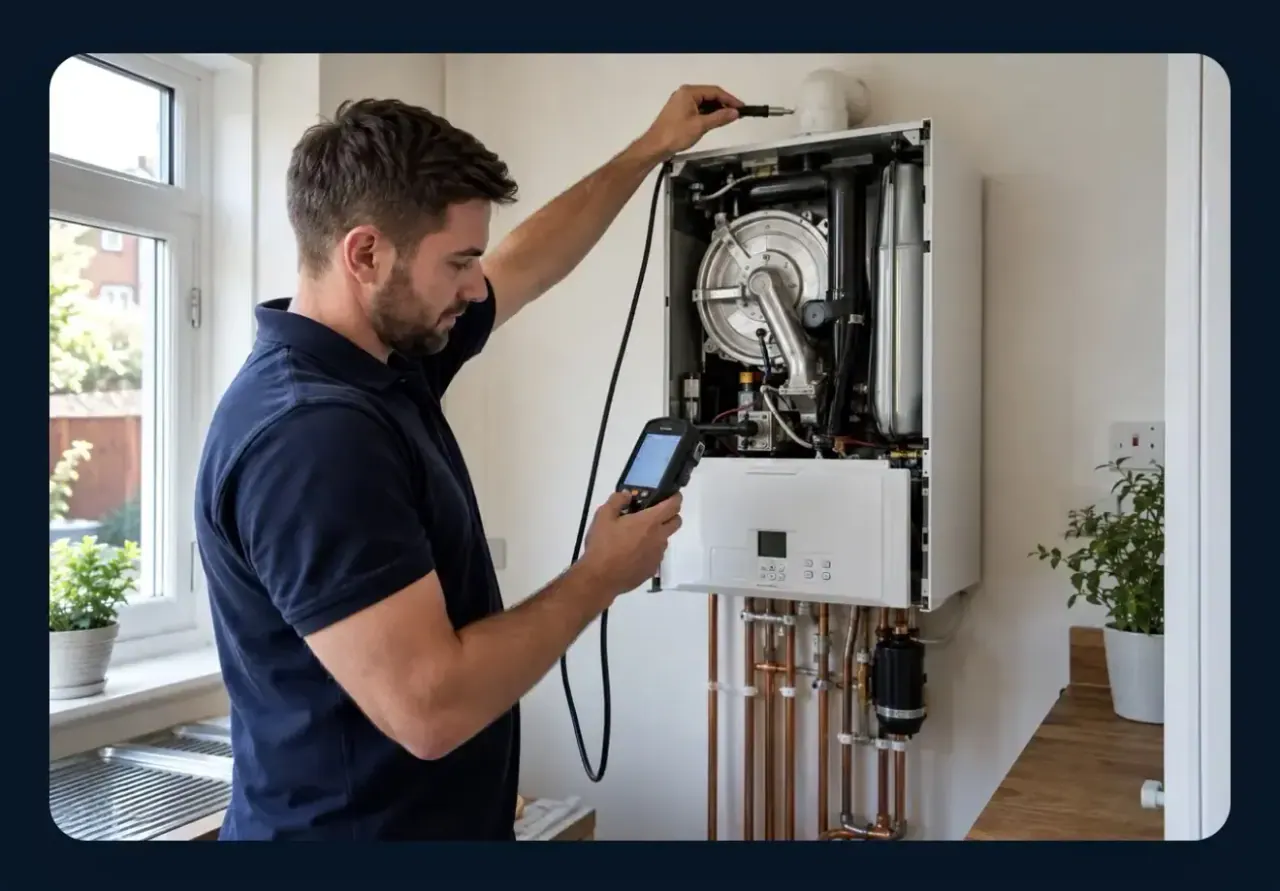
Start with the reason for changing
A conversion changes the heating or hot-water configuration. That may help with cylinder space, planned bathroom changes or household demand, but the proposed benefit should be clear before the system is redesigned.
Replacing the appliance while retaining its existing configuration is another option. We compare the retained arrangement with a conversion so that you can understand both the work involved and what would change in everyday use.
Regular or heat-only to combi
This journey may involve removing a cylinder and redundant storage or feed components, reconnecting hot-water pipework and checking existing showers. We first establish what each component serves; removal cannot be assumed from the presence of a tank alone.
The new mains-fed hot-water arrangement must suit the incoming flow and pressure and the household’s simultaneous demand. The heating circuit also needs assessing for the proposed pressure arrangement and appliance requirements.
System boiler to combi
Changing from stored to instantaneous hot water may release cylinder space. The assessment needs to explain whether the combi will meet the way you use taps, baths and showers, particularly when several outlets are used together.
Cylinder removal, redundant connections, domestic hot-water distribution and controls need to be included in the scope. A simple appliance swap is not an accurate description where the hot-water arrangement changes.
Combi to system boiler
Adding a cylinder may be considered where stored hot water better fits household routines or planned bathroom use. The proposal needs suitable cylinder space, an assessed storage and recovery design, and a water-supply arrangement that supports it.
Work can include cylinder connections, additional controls, valves and pipework. The system boiler and cylinder must be specified together; adding storage does not remove the need to assess the incoming water supply.
What the conversion assessment covers
We establish the current heating and hot-water arrangements, inspect relevant pipework and assess the boiler position, flue route and condensate disposal. Where applicable, the gas supply is checked against the proposed appliance requirements.
Water quality and the condition of the heating circuit inform the cleaning method; power flushing is not automatically required for every conversion. Controls, cylinder or tank work, disposal and making good should be clearly included or excluded in the written scope.
Compare the complete proposed work
There is no universal conversion price or completion time. Boiler specification, access, pipe routes, system condition and the amount of alteration can make two apparently similar conversions very different projects.
Ask for an itemised scope explaining the appliance, controls, any storage changes, system preparation and required alterations. The quotation should also set out the warranty conditions and the expected interruptions to heating and hot water.
Configuration and fuel are different decisions
A combi, system or heat-only label describes the arrangement. Gas, LPG and oil describe fuel choices. The available supply, appliance compatibility and the installation design must be checked separately; a listed gas model is not automatically suitable for LPG or oil.
Understand what a boiler assessment considers · Explore your options with the Boiler FinderExplore the configuration guides
Read the arrangement that interests you, then discuss its suitability for your home.
Common questions about boiler conversions
Can I change a regular boiler to a combi?
It may be possible, but the supply, demand and existing system must be assessed. Cylinder and tank changes, showers, pipework and the heating-circuit arrangement can all affect the scope.
Is a conversion always better than a like-for-like replacement?
No. A suitable existing configuration may meet your needs with less alteration. The decision should follow a comparison of everyday benefit, system condition and the required work.
Can the conversion price be confirmed from the boiler model alone?
No. The appliance is only one part of the scope. Access, pipework, flue, controls, cleaning and cylinder or tank changes need assessment before a final quotation.
Understand the complete quotation
The boiler, warranty option, controls, flue and condition of the existing system affect the proposed work and price. Any cylinder changes, pipework alterations or conversion requirements should be explained before you agree to proceed. No generic guide can confirm a fixed installation price for your home.
Starting-package pricing and its conditions · Installation assessment and scope
0% finance options over 3, 6, 9 or 12 months may be available through Humm Group Limited, subject to application, eligibility, approval and provider terms. Any applicable deposit, fees and repayment conditions are confirmed during your enquiry/application. Read the full finance terms and charges.
Manufacturer warranty eligibility depends on the exact appliance and installation package. We confirm the applicable term, registration and servicing requirements in your quotation.
Your next step
Assess First. Recommend Second.
Tell us about your current heating, hot-water routines and plans for your home. We will explain the assessment needed before recommending a configuration or appliance.
Gas Safe registration 978273 · Cardiff, South Wales and across the UK.