

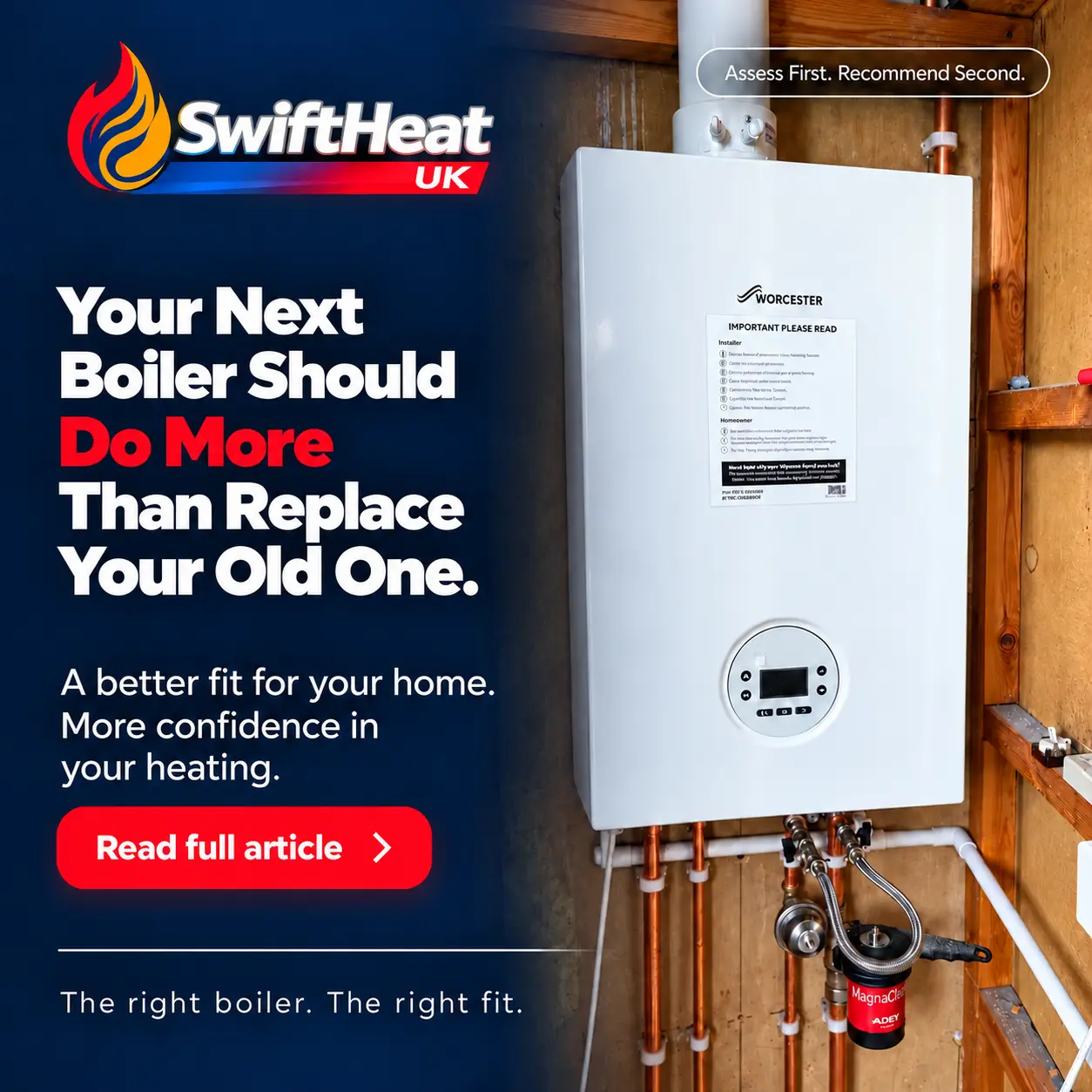
What would you like your next boiler to do better?
Warm the room that never feels comfortable? Support your household’s morning hot-water routine? Make the heating easier to use?
When a boiler becomes unreliable, getting it replaced understandably takes priority. But before you choose its successor, there is an opportunity worth exploring.
Some everyday frustrations may come from the boiler. Others may involve the water supply, radiators, controls or the way the system has been set up.
Understanding that difference helps you put your money into improvements that suit your home.
The most valuable part of your next installation could begin before the new boiler arrives—with the questions your installer asks.
Here are seven conversations worth having.
1. What size does our home actually need?
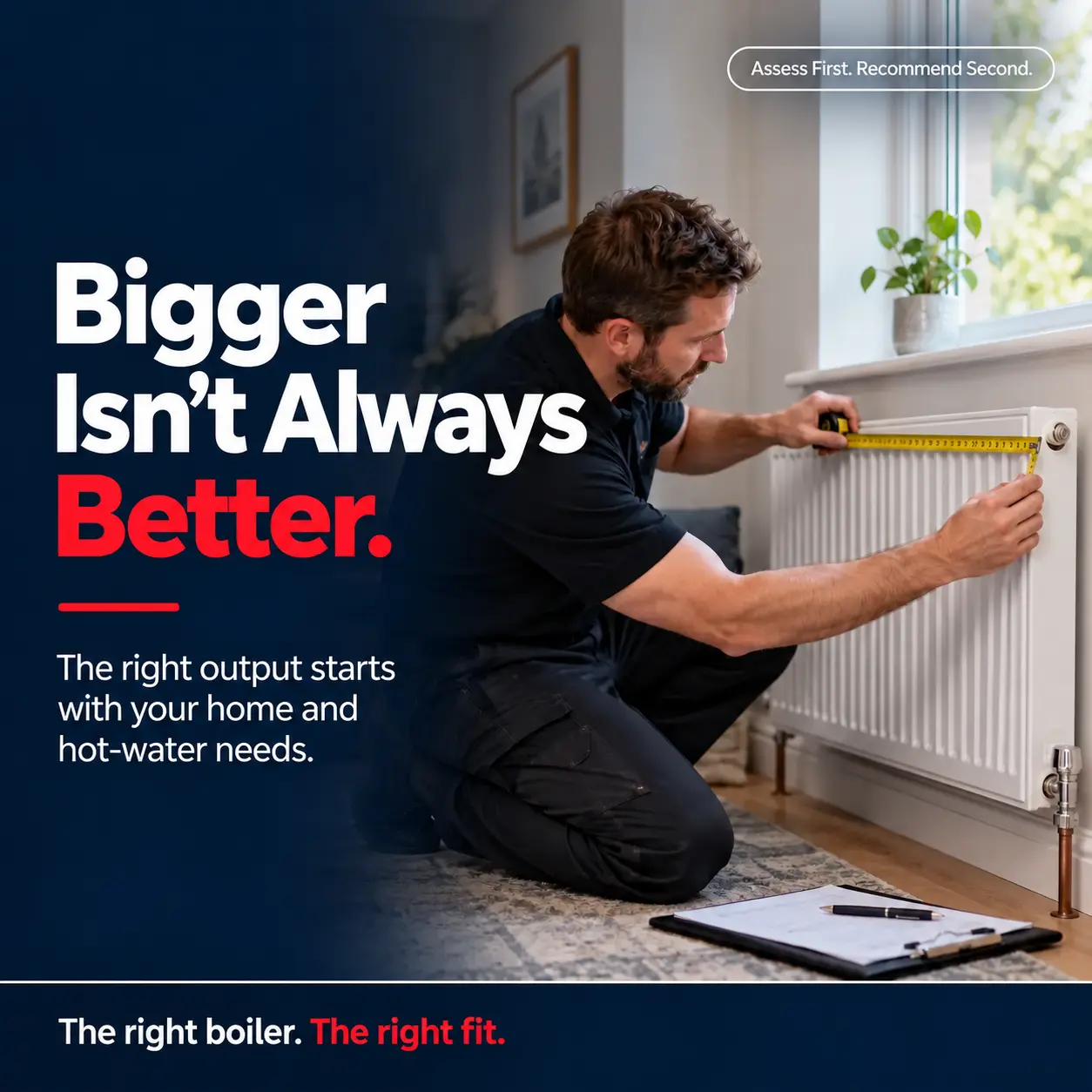
A higher kilowatt figure can sound like an upgrade. But boiler output describes capacity, not quality.
There are two demands to consider: heating your rooms and producing hot water.
A combi heats tap water on demand, so its maximum hot-water output can be substantially higher than the property needs for space heating. Boilers working with a hot-water cylinder require a different approach to selection.
A useful assessment considers both demands, rather than choosing a bigger model simply because it offers more power.
Ask about operation when demand is lower, too. Modulation describes how a boiler varies its output; its ability to reduce output is another consideration alongside its maximum capacity.
The right output starts with understanding your home and hot-water needs.
The question to ask:
“How have you worked out the right output for our heating and hot-water needs?”
You should receive an explanation that relates to your property and household.
2. Could our water supply be limiting the shower?
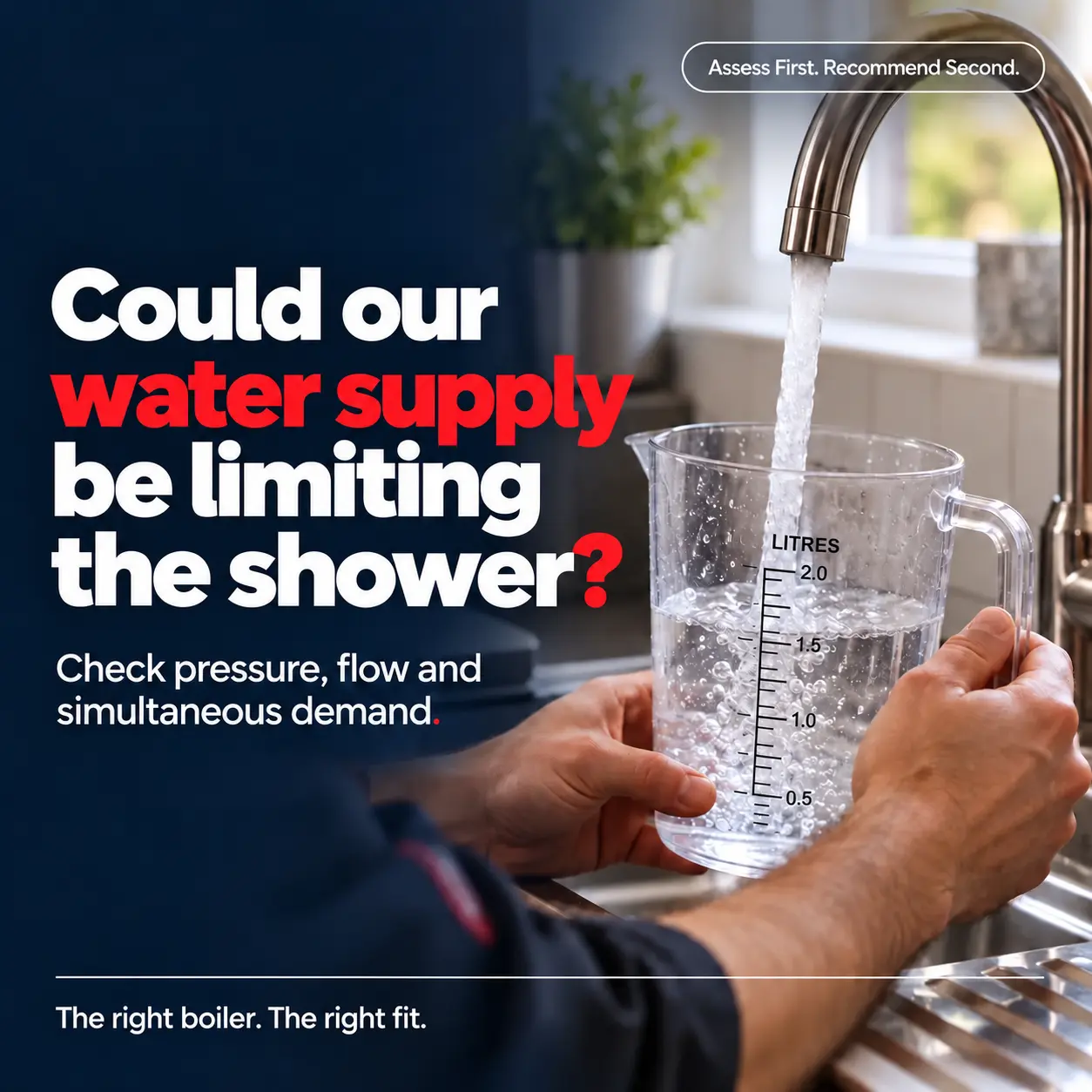
If the shower weakens when another tap opens, it is tempting to assume that a more powerful boiler will solve it.
The incoming supply deserves a check first.
Pressure is the force pushing water through the pipework. Flow rate is the volume delivered over time, usually measured in litres per minute.
A supply can have reasonable pressure but insufficient flow to satisfy several outlets at once. A new combi cannot, by itself, increase the capacity of that incoming supply.
This makes your routine important. Two showers running together create a different requirement from one bathroom used at a time. Cold taps and appliances may also compete for the supply.
Checking pressure, flow and simultaneous demand helps establish what is achievable—and whether the proposed system suits the way you use water.
The question to ask:
“What performance should we expect when other outlets are running?”
That answer is far more useful before installation than after your first busy morning.
3. Which boiler type fits the way we live?
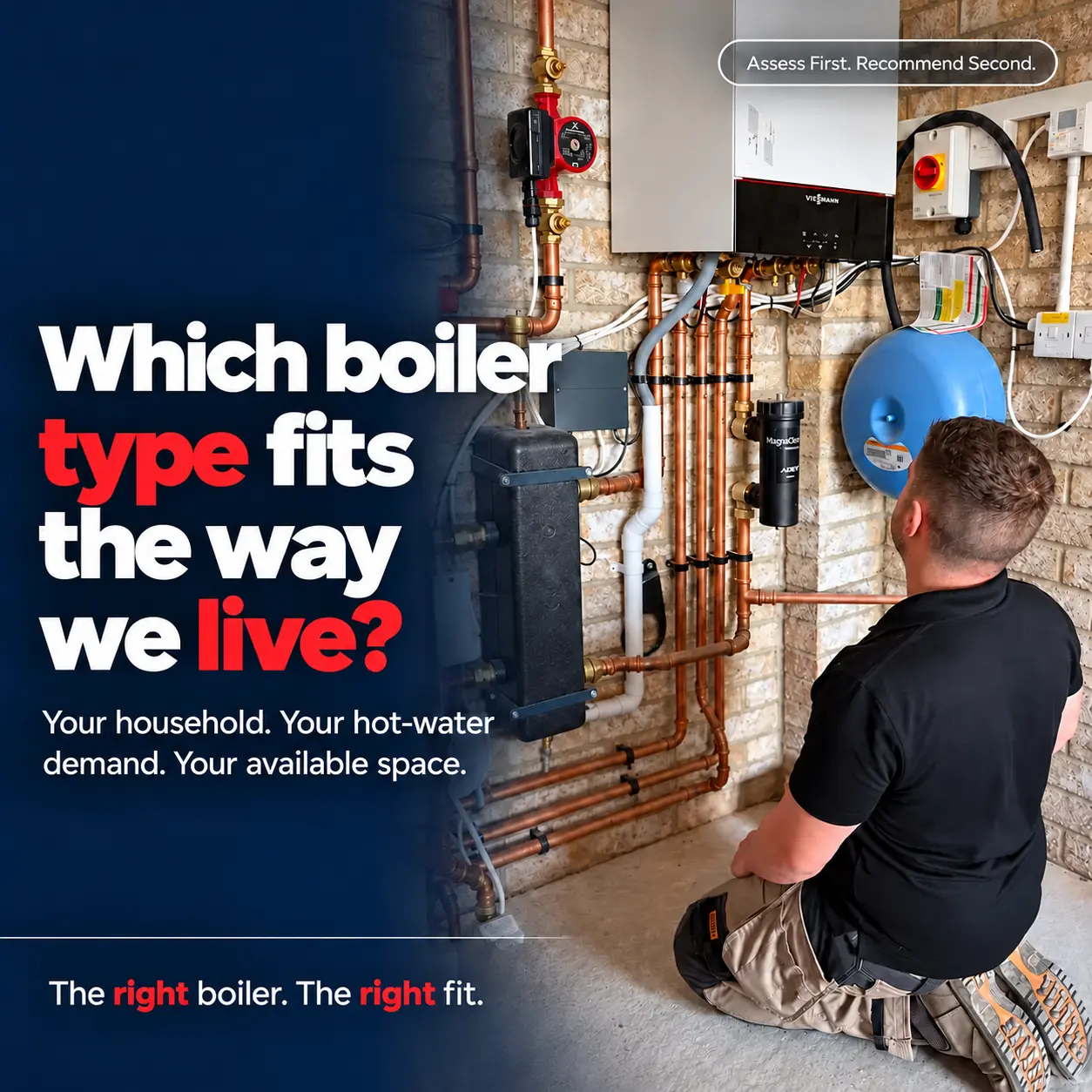
Space matters. So do bathroom use, household size and the amount of hot water you need at busy times.
A compact combi may suit your priorities. A system with stored hot water may deserve consideration. Retaining an existing arrangement can also be appropriate.
Stored hot water is not unlimited, and a compact appliance is not automatically the best fit. The complete arrangement needs to work for your household.
If a conversion is recommended, ask what changes, what benefit you gain and what additional work is included.
The question to ask:
“Which suitable options have you considered, and why is this your recommendation?”
4. What could better efficiency mean for us?
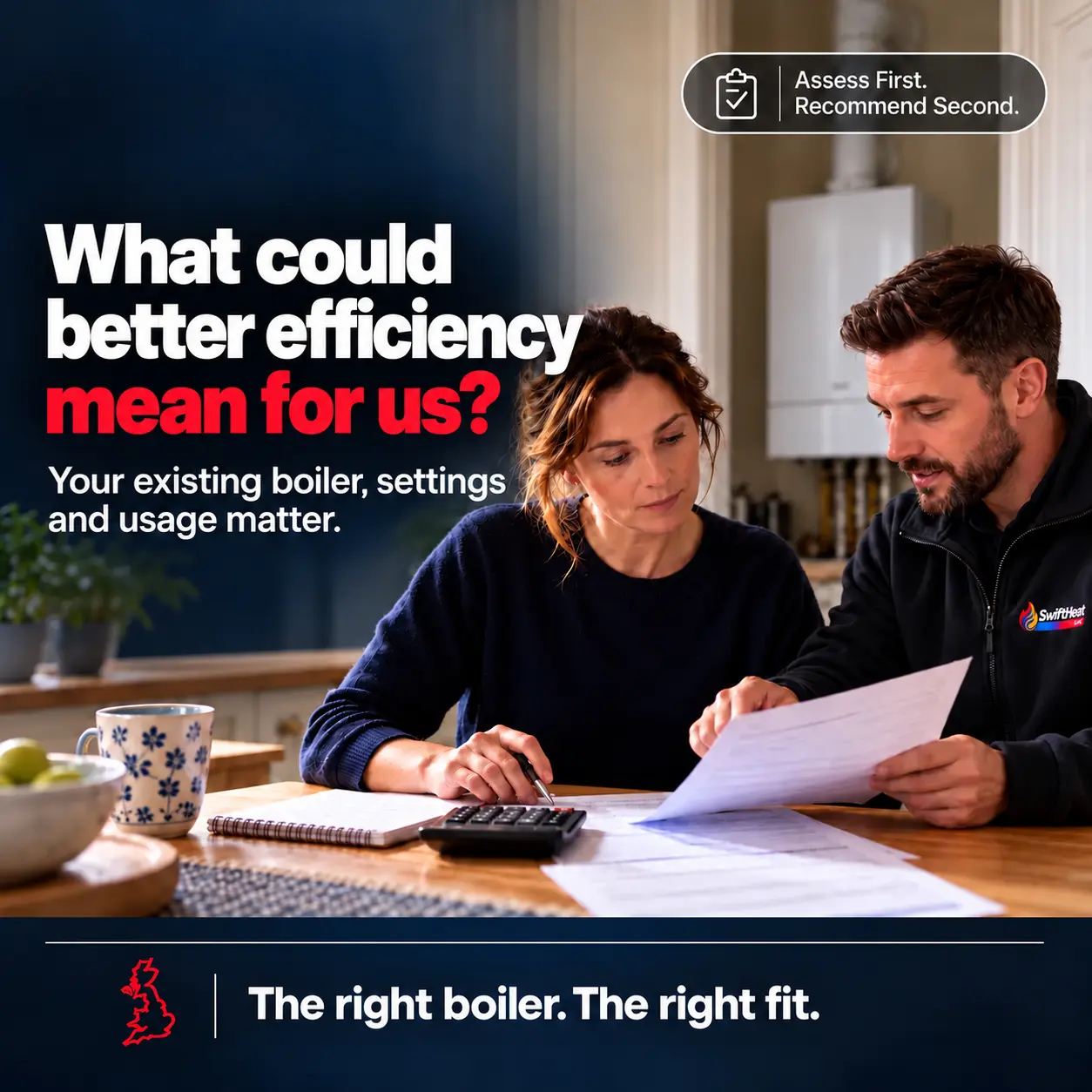
An efficiency rating helps you compare appliances. Understanding your existing system helps put the potential benefit into context.
Modern condensing boilers recover heat from exhaust gases that older, non-condensing appliances would lose through the flue. That can reduce the fuel needed to provide useful heat.
But an efficiency percentage is not a promised reduction in your total energy bill.
A simple illustration
To deliver 10,000 kWh of useful heat:
- At 70% efficiency, approximately 14,286 kWh of fuel is needed.
- At 90% efficiency, approximately 11,111 kWh of fuel is needed.
That is approximately 22% less fuel for the same useful heat.
These are illustrative assumptions, not a forecast for your home. Actual results depend on the existing appliance, installation, settings and usage. Electricity consumption and standing charges are separate.
Your existing boiler, system settings and household usage all matter. A worthwhile discussion should explain the starting point, the assumptions and the improvements being proposed.
The question to ask:
“What is your savings estimate based on, and how does it relate to our existing boiler?”
5. Can we make that difficult room more comfortable?

A boiler replacement is a good time to mention the bedroom that warms slowly or the living room that never feels quite right.
Those details help direct the assessment.
Radiator size, room heat loss, water circulation and system settings can all influence comfort. Replacing the boiler alone may not resolve an underlying problem elsewhere.
The temperature of water leaving the boiler for the radiators is called the flow temperature. This is different from the room temperature selected on your thermostat.
Lower heating-water temperatures can help a condensing boiler operate more efficiently, provided the radiators can still keep the home comfortably warm. Warm-up may take longer, and suitable settings depend on the property and conditions.
The goal is a comfortable room. A scorching radiator is not, by itself, proof of an efficient system.
Heating temperatures should suit your home. Your handover should explain the settings and how to use them.
If you have a hot-water cylinder, ask your engineer before changing settings that also affect stored hot water. Appropriate cylinder heating and safe storage temperatures must be maintained.
The question to ask:
“How will you assess the rooms we find difficult to heat?”
6. Will the controls make everyday life easier?

The best controls for your household should make sense to the people using them.
A schedule determines when heating is needed. A room thermostat regulates the target temperature. Thermostatic radiator valves help manage temperatures in individual rooms.
Some compatible systems offer additional functions:
- Load compensation adjusts boiler operation in response to room heating demand.
- Weather compensation adjusts heating-water temperature in response to outdoor conditions.
An app may provide convenient remote access, but it does not tell you everything about how the boiler and controls work together.
Compatibility, useful schedules and a clear handover all matter.
Before handover ends, you should feel confident adjusting the temperature, changing the schedule and finding the everyday settings you need.
The question to ask:
“What will these controls do with this boiler, and will you show us how to use them?”
7. What does the installation price actually include?
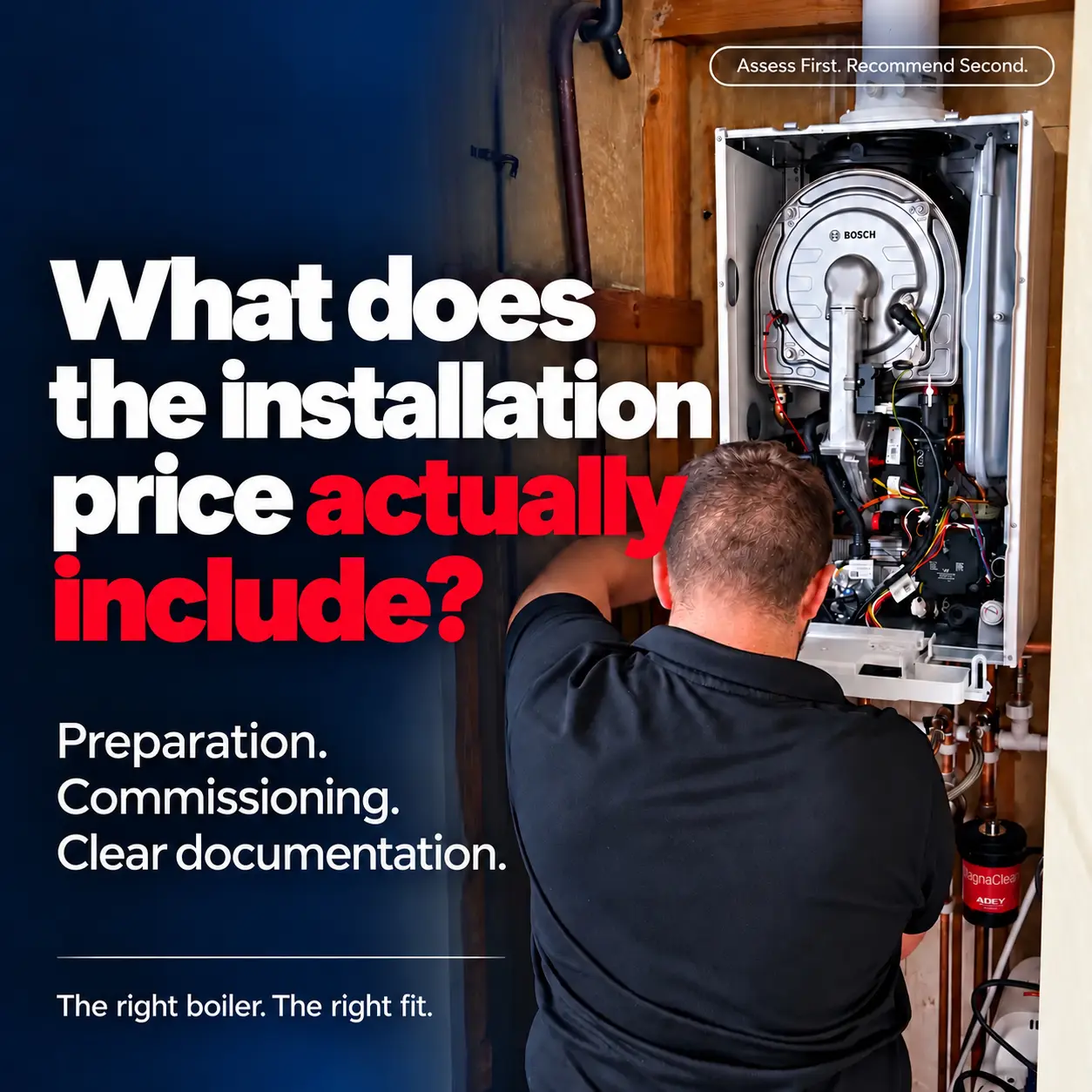
Two quotations can name the same boiler and cover different work.
Looking beyond the boiler price helps you understand the preparation, commissioning and support included in the installation.
Ask for clarity on:
- System cleaning, water treatment and filtration.
- Controls and any radiator or pipework alterations.
- Flue and condensate arrangements.
- Commissioning, documentation and customer handover.
- Manufacturer warranty and registration.
- Servicing requirements and workmanship cover.
- The complete price and any exclusions.
Existing system condition should inform the work proposed. Ask why particular cleaning or protection measures have been recommended.
Warranty length also needs context: what is covered, who handles a claim and what must you do to maintain the cover?
The question to ask:
“Can you explain what is included, why it is needed and what support follows installation?”
A clear answer helps you compare the value of the whole job.
Better Heating Starts With a Better Conversation

Your home. Your priorities. Your budget.
You do not need to understand boiler specifications before requesting a quotation.
You already know something equally useful: what it is like to live with your current heating.
You know which room needs another layer on a winter evening. Whether the morning shower routine works. Which controls leave you guessing. How often you worry about another breakdown.
Those experiences help define what a successful replacement should achieve.
At SwiftHeat UK, our approach is Assess First. Recommend Second.
We consider your home, your requirements and your budget before explaining suitable options. Where additional work could address a concern, we explain why. Where a straightforward replacement is appropriate, we explain that too.
You should understand what we recommend, what the installation includes and what you can reasonably expect from it.
That is how choosing a new boiler becomes a clear plan for improving your heating.
What would you like to improve first?
Send us a photograph of your existing boiler on WhatsApp, together with the three things you would most like your heating or hot water to do better.
We’ll discuss your priorities, arrange the assessment needed and explain the suitable options for a clear, fixed-price quotation.
Your photograph starts the conversation. Your home’s requirements guide the recommendation.
Discover what a better fit could look like for your home.
Freephone or WhatsApp: 0800 043 3464
Email: info@swiftheatuk.co.uk
Website: www.cardiffswiftheatuk.co.uk
SwiftHeat UK Group Ltd | Gas Safe Registration 978273
The right boiler. The right fit.